


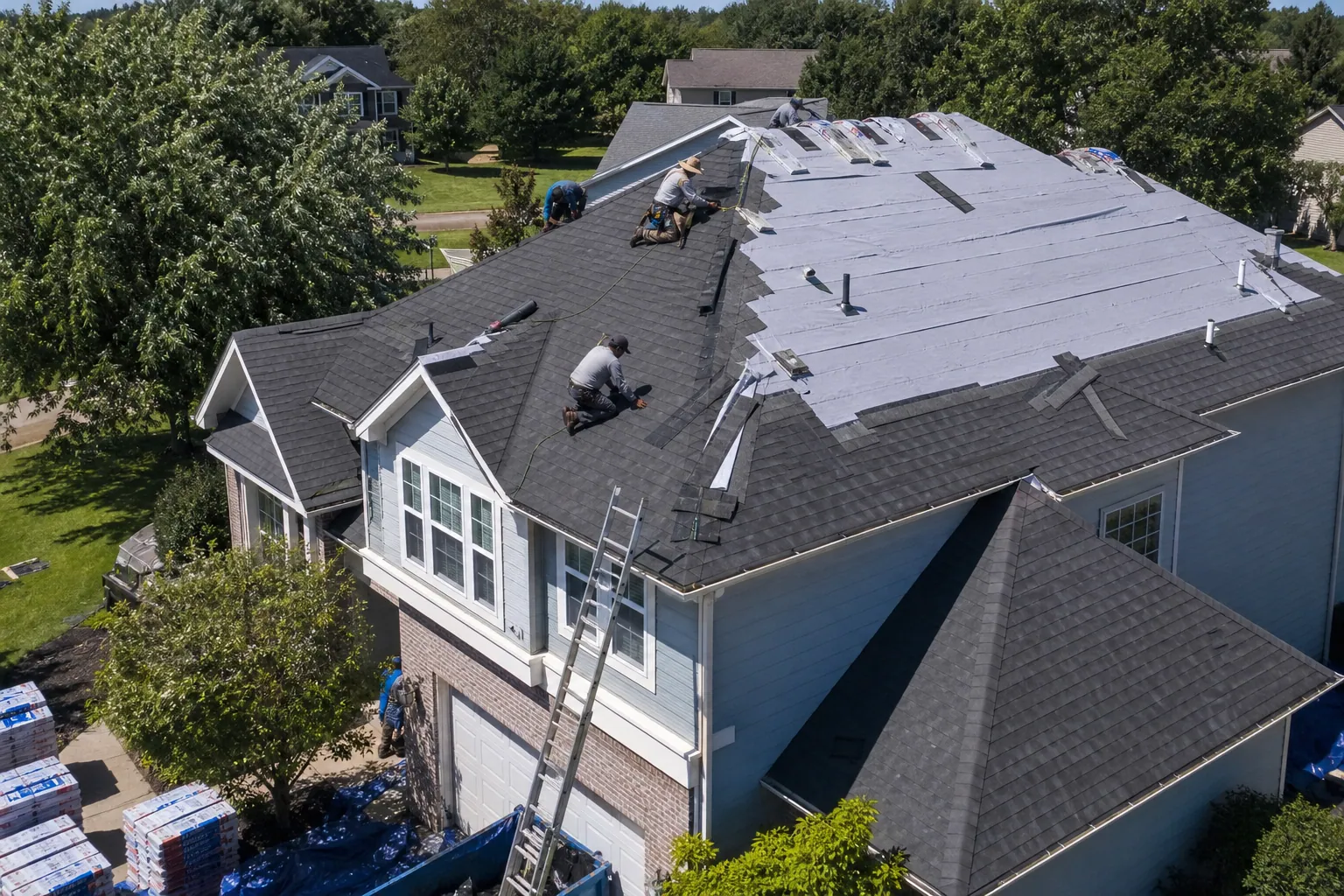
A full roof replacement is one of the largest single checks most homeowners ever write, and quotes for the same house can differ by thousands of dollars. In 2026, most US homeowners pay somewhere between $9,000 and $25,000 for a new roof, with asphalt shingles at the low end and metal or tile well above it. The spread is wide because the price depends as much on your specific roof as on the material you pick.
This guide breaks down what each material actually costs per square foot, the factors that move your quote up or down, how people pay for it, and how to tell whether a repair will do the job instead. No scare tactics — just the numbers and the logic behind them.
Roofers price by the "square" — 100 square feet of roof surface. A typical 2,000-square-foot US home carries about 17 to 22 squares of roof once you account for pitch and overhangs, so per-square-foot prices add up fast.
Those figures include tear-off of one shingle layer, underlayment, flashing, and permits in most markets. Coastal metros, high-cost states, and post-storm demand spikes can push totals 15–25% higher.
Two houses with the same footprint can get very different quotes. Four variables explain most of the gap:
That last one is the classic change-order, and it's worth budgeting a 10% cushion for it. It's also where a licensed contractor like Acme Roofing earns the fee — spotting soft decking during tear-off, fixing it to code, and documenting it with photos instead of papering over it.
Not every leak means a new roof. Repair usually wins when the roof is in the first half of its expected life, the damage is localized to one area, and the decking underneath is sound. Typical repair jobs in 2026 — reflashing a chimney, patching a wind-torn section, swapping a failed pipe boot — run $400 to $1,800.
Replacement makes more sense when leaks keep showing up in different spots, shingles are curling or shedding granules across the whole roof, or you're within a few years of the material's expected lifespan. A useful rule of thumb: if a repair would cost more than about 25% of replacement and the roof is past its halfway point, put that money toward the new roof instead.
Few people have $15,000 sitting in checking, and there are more options than the contractor's brochure suggests:
Some utilities and states also offer rebates for reflective "cool roof" materials, so check local programs before you sign a contract.
Get at least three itemized quotes, and make sure each one specifies the exact shingle line, underlayment type, ice-and-water shield coverage, ventilation work, and the per-sheet price for decking replacement. Vague one-line quotes are where surprise costs live.
Check license and insurance before you compare prices, because an uninsured crew is only cheap until something goes wrong. And if your market slows down in late fall or winter, asking about off-season scheduling can shave real money off the exact same job.