

Every roof decision eventually comes down to the same question: patch it or start over. A repair usually runs a few hundred dollars; a full replacement on a typical US home runs $9,500 to $14,500 in 2026. A gap that wide is exactly why the wrong call — in either direction — gets expensive.
The good news: you don't need to guess. Three factors — your roof's age, how far the damage has spread, and the repair-to-replacement cost ratio — settle the question for almost every roof. Here's how to work through them.
Age sets the baseline, because a repair only makes sense if the rest of the roof has years left in it. Dig up your installation date — closing documents, building permits, or an old invoice — and compare it against typical lifespans.
The working rule: in the first two-thirds of its expected life, repair is usually the right call. In the final third, every repair dollar goes into a depreciating asset, and replacement starts winning even when the immediate fix looks cheap.
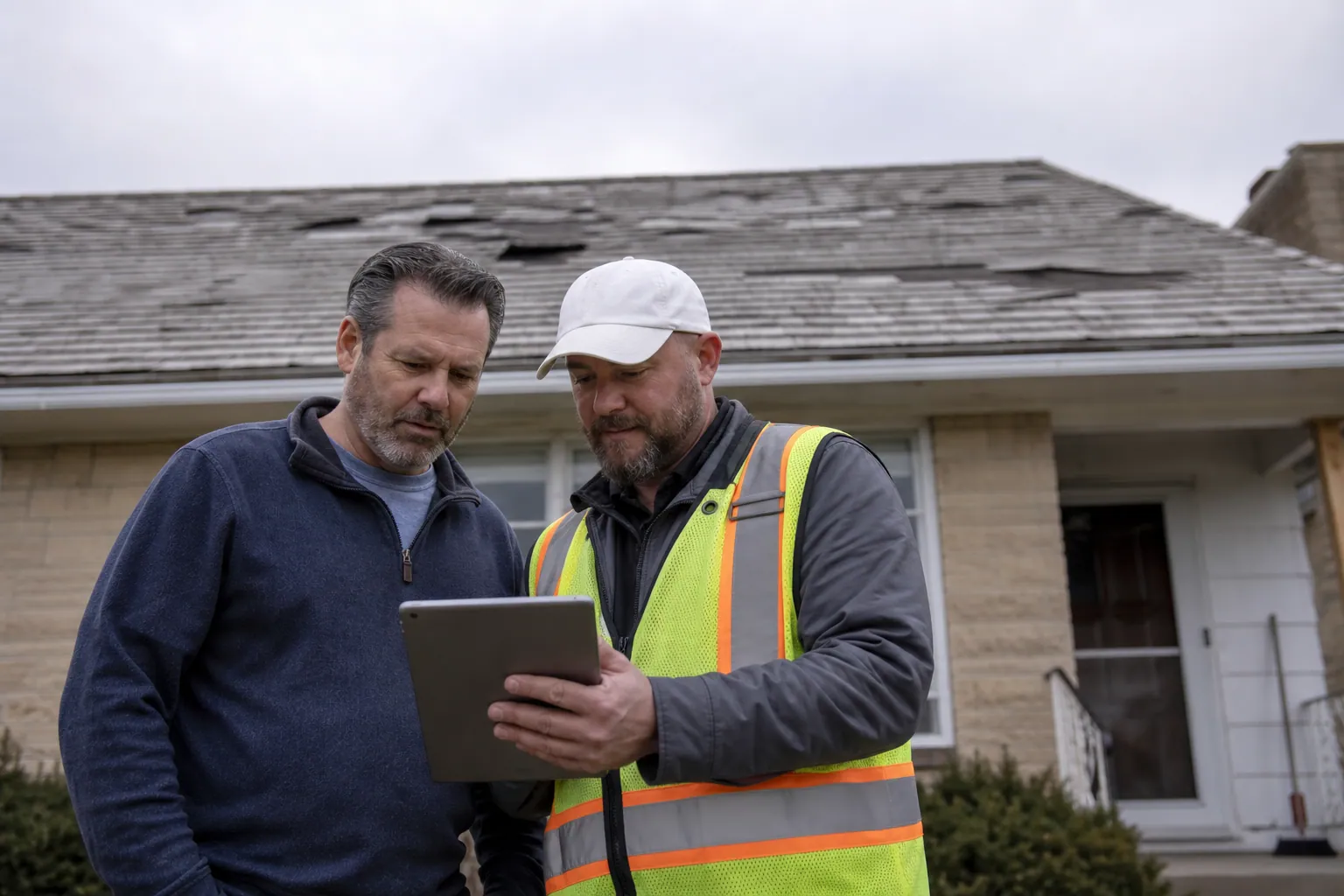
A dozen shingles torn off in a windstorm is a repair. Leaks showing up on two different slopes six months apart is a pattern. What matters isn't how dramatic the damage looks — it's whether it's localized or systemic.
Damage is usually repairable when:
When damage shows up in multiple unrelated places, you're no longer fixing a problem. You're chasing the leading edge of a failure that will keep moving.
Get two numbers before deciding anything: the cost to fix what's wrong and the cost to replace the roof. If the repair lands above roughly 25 percent of the replacement price, replacement deserves a serious look — especially on a roof past the midpoint of its lifespan.
Here's what those numbers typically look like in 2026:
So a $3,200 repair against a $12,000 replacement is a 27 percent ratio — on a 16-year-old roof, that money is better spent starting over. One wrinkle: some jurisdictions (Florida is the best known) bake their own 25 percent rule into building code, triggering broader code-compliance requirements once you repair more than a quarter of the roof within a year. Code questions, structural decking, and anything steep or high are exactly where a licensed contractor like Acme Roofing should take over — that part isn't a judgment call.
The most expensive roofs are the ones replaced one patch at a time. A $600 fix in March, an $850 fix in October, a new drip the following spring — no single repair feels like a big decision, but three years of them can add up to a third of a new roof with nothing durable to show for it.
Keep a log: date, location, cost. Two signals mean the trap has sprung — three paid repairs within two years, or leaks appearing in new places instead of returning to one known trouble spot. Either one means you've stopped maintaining the roof and started subsidizing its decline.
Some symptoms aren't really repairable, because they mean the materials themselves are worn out. If you're seeing several of these at once, price a replacement, not a patch.
None of these mean the roof fails tomorrow. They mean repair money spent now is buying months, not years.
The whole framework in one pass: young roof plus localized damage, repair it. Old roof plus spreading damage, replace it. Everything in between comes down to the 25 percent math and an honest read of your repair log.
And get quotes framed both ways. Ask whoever bids the repair what a replacement would cost, and ask whoever bids the replacement whether a repair could buy you five more years. How readily they answer tells you a lot about the roof — and about the contractor.