


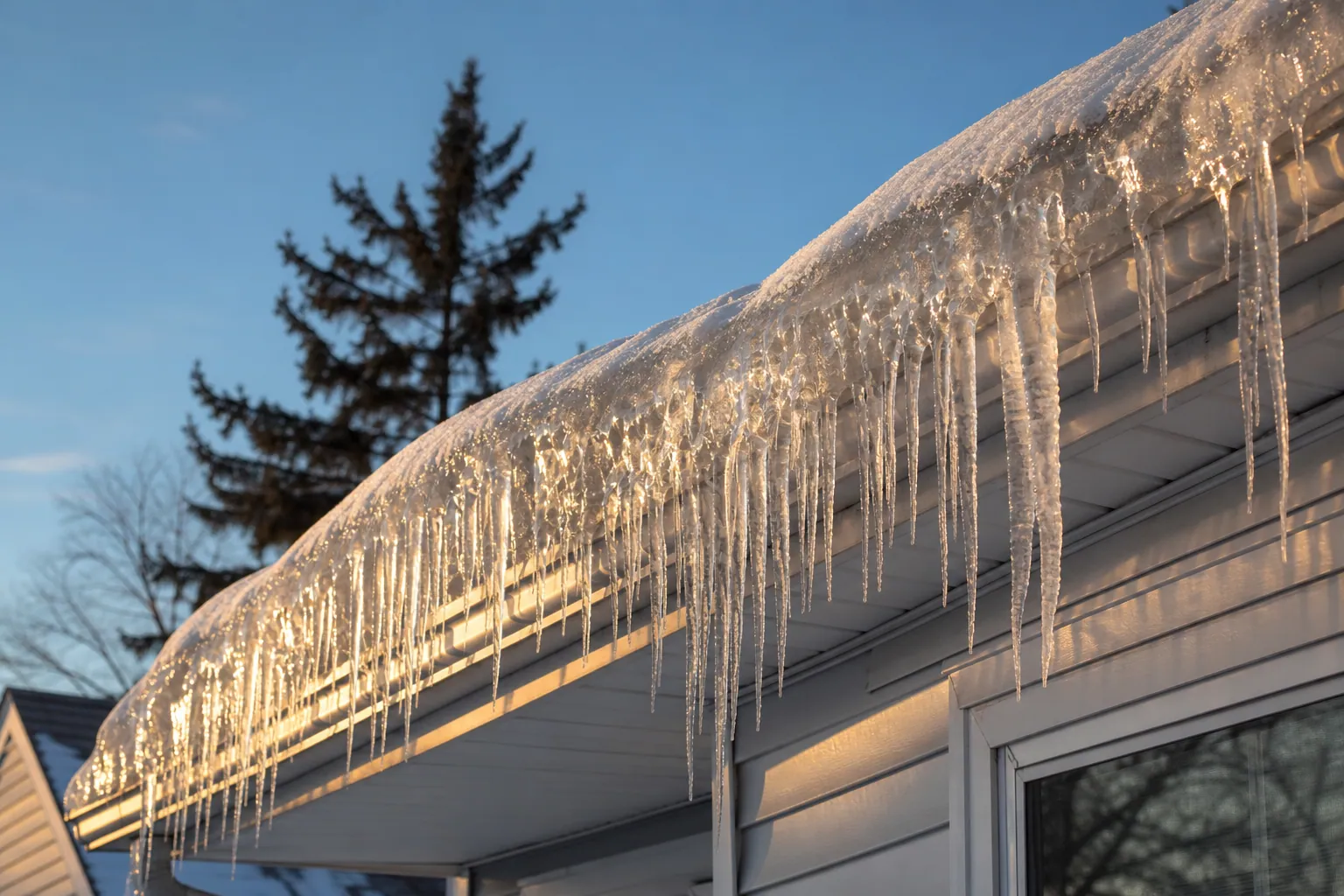
An ice dam is a ridge of ice that builds along the edge of a roof and traps melting snow behind it. The trapped water has nowhere to go but sideways — under the shingles, through the roof deck, and down the inside of your walls. It's one of the most expensive winter problems a house can have, and it almost never starts on the roof.
It starts in the attic. That matters, because most of what people do about ice dams — chipping at ice, tossing salt, stringing heat cable everywhere — treats the symptom instead of the cause. Here's how dams actually form, what they do to a house, and the fixes that work, roughly ordered by payoff per dollar.
Picture a roof holding 8 inches of snow on a 20°F day. Heat escaping from the living space warms the roof deck above freezing, and the underside of the snowpack starts to melt. That meltwater runs downhill until it reaches the eaves — the overhangs that stick out past your exterior walls, with no heated space beneath them.
There, still exposed to 20°F air, the water refreezes. Every melt cycle adds a layer, and within days you have a ridge of ice with a pool of meltwater growing behind it. Shingles shed water moving downhill; they were never designed to hold standing water, so it wicks up under the courses and into the deck.
Two ingredients, every time: snow on the roof, and a roof deck warmer than the outside air. You can't control the snow. You can absolutely control the heat.
Once water gets past the shingles, it takes the cheapest path down and damages everything along the way:
Interior repairs alone commonly run $2,000–$5,000 once drywall, insulation, and repainting are involved. Homeowners insurance usually covers sudden interior water damage, but not the gradual roof deterioration behind it.
The goal is a cold roof — a deck that stays close to the outdoor temperature — plus a backstop for the heat you can't eliminate. In rough order of payoff:
If a dam has already formed and water is showing up inside, you have two safe DIY moves. Rake snow off the bottom 4 feet of roof with a roof rake ($30–$60) while standing on the ground — no snow, no meltwater. And lay a sock filled with calcium chloride vertically across the dam to melt a drainage channel; skip rock salt, which corrodes metal and kills the plants below.
What's not worth it: hammers, hatchets, and ice picks crack shingles that are frozen brittle, pressure washing strips protective granules, and climbing an icy ladder to do any of it is how people get hurt. For serious dams, steam removal — typically $500–$1,500 for most homes — is the one method that clears ice without damaging the roof, and it's rooftop work in January with commercial equipment. That part belongs to a licensed roofing contractor like Acme Roofing.
A little prep in October beats a leak in January:
Big icicles look festive, but they're the roof telling you it's leaking heat. Fix the attic now and the ice never gets a chance to form.